Product Description
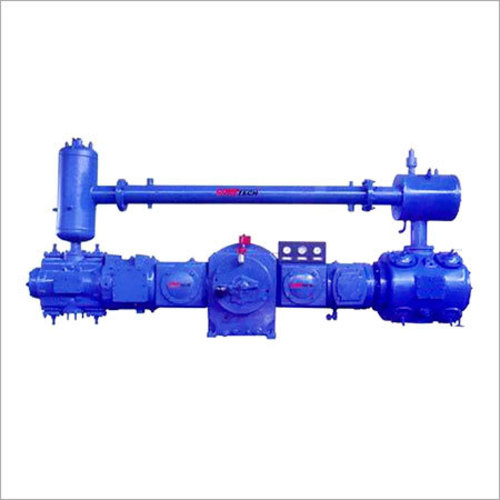
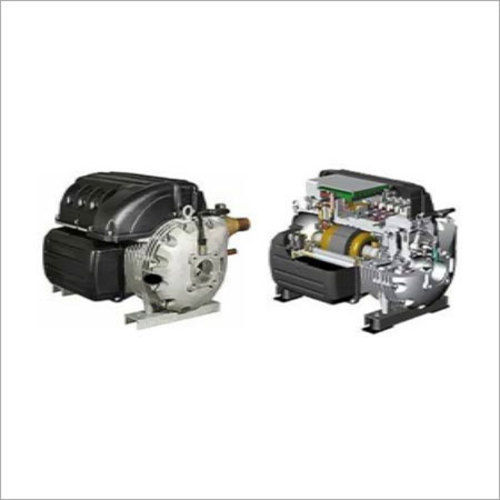
Holding a highly reputed and trusted market standing, we are engaged in manufacturing and supplying Opposed Compressor. It has well placed cushioned valves, transparent covers and ample space, ensuring ease of inspection and maintenance. Our dexterous workforce uses quality grade materials and components to manufacture this compressor. It is used in chemical, petrochemical and power plants. Minimum foundation, low wear of moving parts, hence no horizontal or vertical imbalanced forces ensuring vibration free operation. We offer Opposed Compressor at cost effective prices to clients.
Specification
| Horse Power (HP) | upto 215 HP |
Features:
- Highly energy efficient
- Robust construction
- Easy to operate
Specifications:
| Model ATBO 4 - 50 P | Motor HP 50 | FAD CFM at 2.5 Kg/cm2 420 | FAD CFM at 4 Kg/cm' 332 |
| ATV 10 - 15 P | 15 | 60 | 43 |
| ATV 9-20 P | 20 | 85 | 70 |
| ATV 9 - 25 P | 25 | 112 | 94 |
| ATV 9 - 30 P | 30 | 135 | 111 |
Optimized for Industrial ApplicationsThis Opposed Compressor is designed specifically for demanding industrial environments where high performance and reliability are essential. The floor-mounted, stationary build, paired with robust cast iron construction, ensures longevity and stable operation. Its direct start-up and automatic control system enable efficient, hassle-free use, making it ideal for continuous air compression tasks in workshops, factories, and manufacturing units.
Superior Air Quality and SafetyEquipped with advanced filtration and a built-in dryer, the compressor delivers industrial-grade air quality suitable for sensitive machinery and processes. The IP54 protection class safeguards the compressor from dust and moisture, while its air-cooled design supports optimal temperature regulation. The low noise level helps promote a safer and more comfortable workplace environment.
FAQs of Opposed Compressor:
Q: How is the Opposed Compressor typically installed in an industrial setting?
A: The compressor is designed for floor mounting and is stationary, ensuring stability and safety during operation. Installation should occur on a level surface with adequate clearance for ventilation and service access. Electrical connections must be performed by a qualified technician, adhering to the 380 V, three-phase power requirements and safety standards.
Q: What are the maintenance requirements and process for this compressor?
A: Routine maintenance involves checking oil levels (with a 2.5 L capacity), inspecting the filters and dryer, cleaning cooling passages, and verifying belt tension for optimal performance. Thanks to its user-friendly design, most service tasks can be performed easily, ensuring minimal downtime and extending equipment life.
Q: When should the compressor be serviced for optimal performance?
A: Regular servicing should be carried out as per the manufacturers recommendations or after a specified number of operating hours. Additionally, periodic inspections should be conducted to monitor oil level, filter condition, and system pressure, especially if the compressor is used continuously in high-demand environments.
Q: Where can this compressor be used most effectively?
A: This opposed type compressor is best suited for industrial applications such as manufacturing plants, automotive workshops, and any setting requiring reliable, high-capacity air supply. Its stationary, floor-mounted design and large tank make it ideal for locations where space is allocated specifically for air compression units.
Q: What safety features are provided by this compressor?
A: The unit features an IP54 protection class enclosure, which shields against dust and water ingress. Automatic controls help minimize operational risk, while the low noise level (<70 dB) enhances the overall safety and comfort within the workspace.
Q: How does the compressor benefit industrial operations?
A: With a powerful 7.5 HP electric motor and double-acting cylinder configuration, the compressor ensures a steady, high-volume air output (45 CFM at 10 Bar), supporting diverse industrial activities. Easy maintenance, advanced filtration, and quiet operation lower operational costs and maximize uptime, driving productivity.










 Send Inquiry
 Send Inquiry
 Send SMS